Twenty-two pages, and every number on them was counted.
This is the front door to the reference section. Six cards on what Xuda is, six on where it runs, six on who it is for and what it costs. Four more pages sit behind the audiences card, one for each kind of reader. They are written from the platform itself rather than from a feature list, and most of them close on what they do not do.

Three questions, in the order people actually ask them.
Nobody arrives at a platform wanting a feature list. They arrive carrying one of three questions, and the pages below are grouped by which one you came with. Read the group that matches and stop. The other two will still be here.
- What is it made of. Six surfaces you author on, and one file that declares all of them.
- Where does it run. The deploy call, hardware Xuda runs itself, a machine of your own, and the shapes a project ships as.
- Who is it for, and what does it cost. Five doors, four priced ladders, and the levels an account can climb.
- What does it not do. Twenty-one of the twenty-three pages close on their own limits rather than on a call to action.
- What Xuda isSix pages. Start here when you do not yet know what the parts are.
- Where it runsSix pages. The box, the region, and the shape a project ships as.
- Who it is forSix pages, and four more behind the audiences card. The reader, the price and the ladder.
Xuda in action.
The same platform the twenty-two pages below take apart, this time running.
Six pages on the parts you actually touch.
Start here when the question is what the platform is made of. Each page takes one surface and reads it out of the source instead of describing it.

Every capability, deployment type and priced plan the platform actually ships, counted rather than claimed.
See what it ships
A Xuda app is a set of typed documents, and one interpreter runs them. The assistant writes into the same tree you edit.
Read about Studio
An agent is one document carrying an ordered list of tools, and at run time that list becomes the tools the model may call.
Read about agents
Five kinds of record reach one catalog through one review gate, and two of them install straight into your project.
Read about the catalog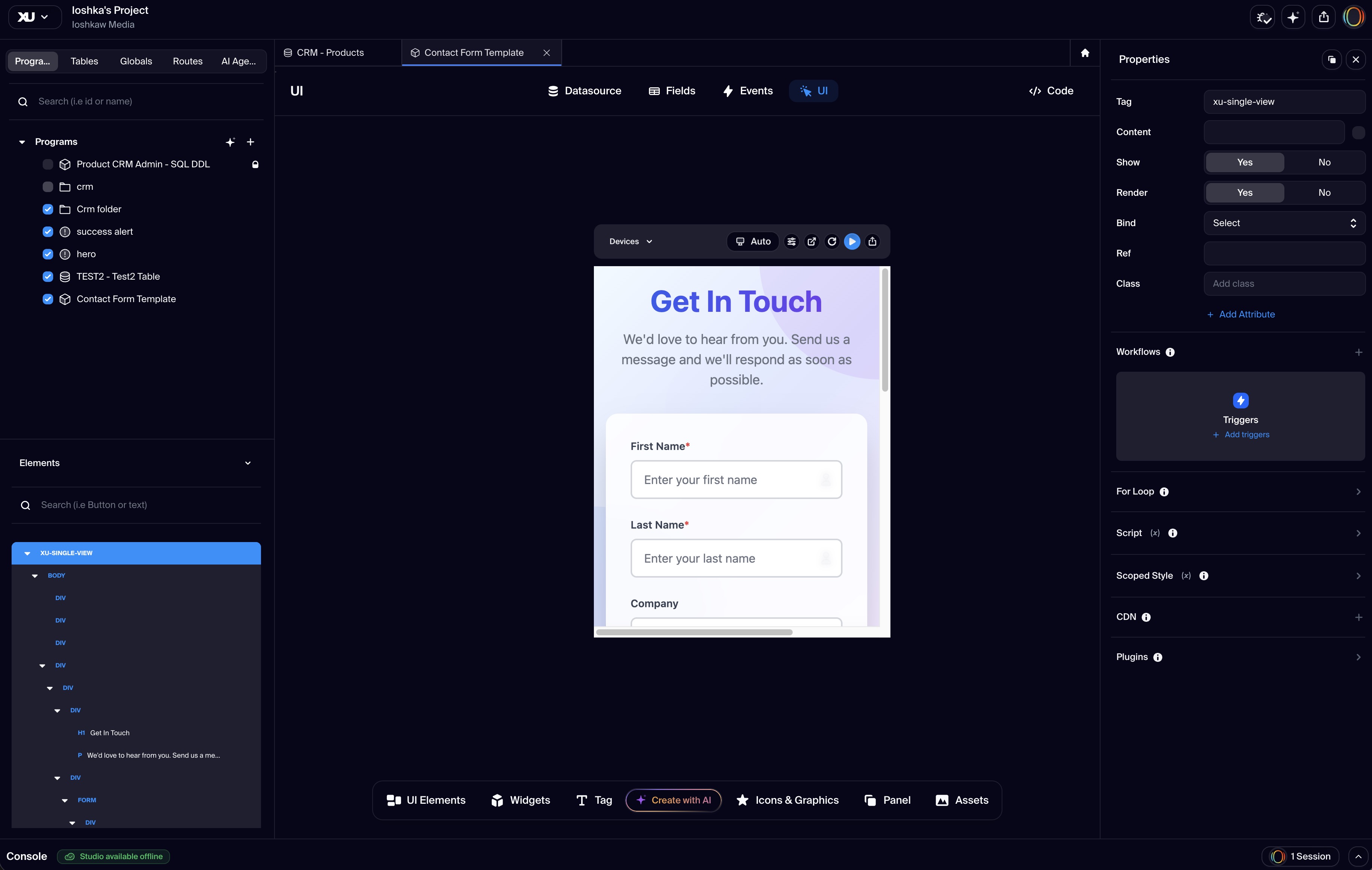
The category on a plugin is not a label, it is the routing rule: it decides which socket the plugin appears in and where its code runs.
Read about plugins
One endpoint, one envelope, and a per-key allowlist. What an external key can reach, and what the private flag walls off.
Read about the APIFrom a sentence to a box in a region.
The six pages above are stages of one arc, and the six below are its last two. Drawing it once means the cards do not each have to explain where they sit.
deployment types you can pick, four of them still in beta
region codes in region_geo, nine of them cities
membership rungs, starting at $0
AI Workspace tiers, the longest ladder we sell
Six pages on the box, the region and the shape you ship.
Once the question moves from what it is to where it runs, these are the six. They cover the deploy call, the hardware Xuda runs itself, a machine of your own, and the shapes a project gets shipped as.

The call comes back before your software is on the box. What happens between those two moments, and what a build that does not deploy is for.
Read about deploying
A datacenter is an app you own, on hardware Xuda runs. How a release reaches a region, and why an interrupted publish has to be guarded against.
Read about datacenters
A full virtual machine per deployment, one of seventeen sizes, with nothing of ours installed on it.
Read about VPS
The shapes a project can be shipped as, which deployment types compose each one, and the plan each of them needs.
Read about scenarios
The same runtime as Studio, dropped into any HTML page from one script tag. A template element in your page becomes a program.
Read about Slim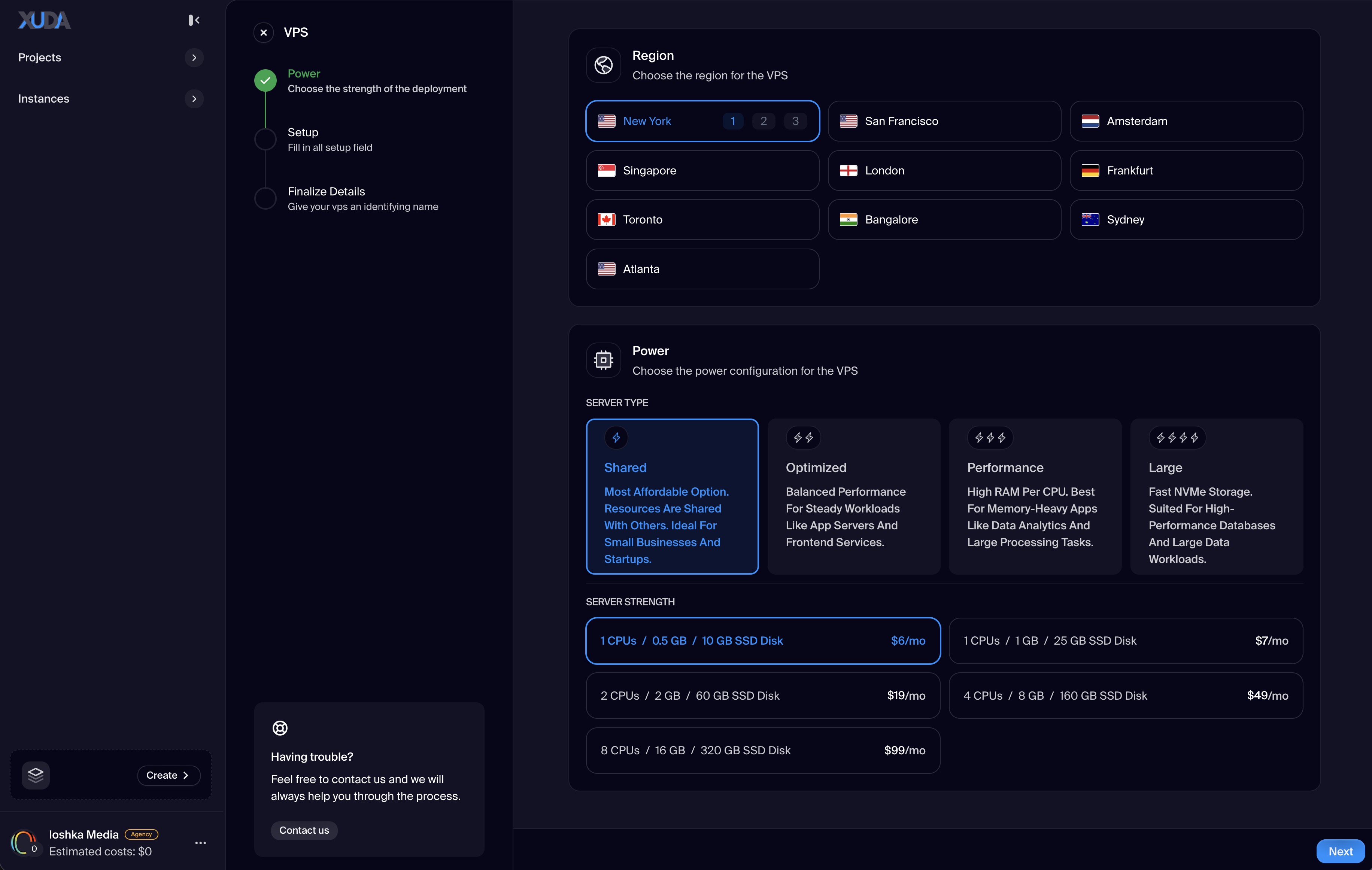
Three rungs and one question: where regulated data is allowed to sit, and what each answer costs.
Read about EnterpriseOne account, three markets, and a door that is not a market.
The doors are picked by what is stopping you rather than by what you would call yourself. Each one has a page of its own, and every one of those pages links back here, so picking wrong costs a click.
Six pages on the price, the plan and the limits.
Every price here is the one you are actually charged, and every plan page says which of its limits are enforced and which are only listed.

Professionals, businesses and enterprises. Five doors, and one account that walks between them rather than a second account per employer.
Find your door
Three ways to earn here, and all three end at the same Stripe account. Including the parts that are not built yet.
Read about earning
Seven rungs starting at $0. Fifteen limits listed on every plan, and the four that are actually enforced.
Read about the rungs
Eight tiers, $0 to $230 a month, taken from the live plan catalogue. Including what we could not verify.
Read about credits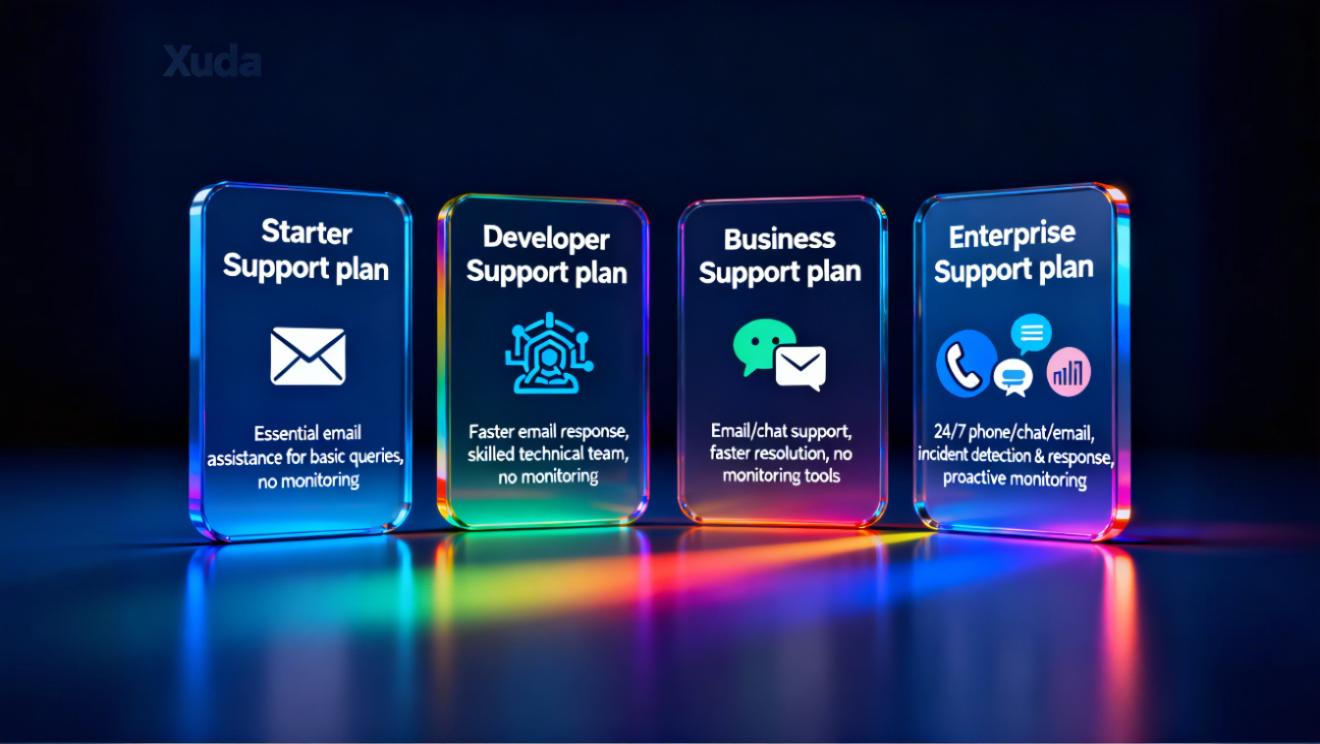
Four tiers, ten ticket topics, and an honest count of how much of the platform the ladder actually gates.
Read about support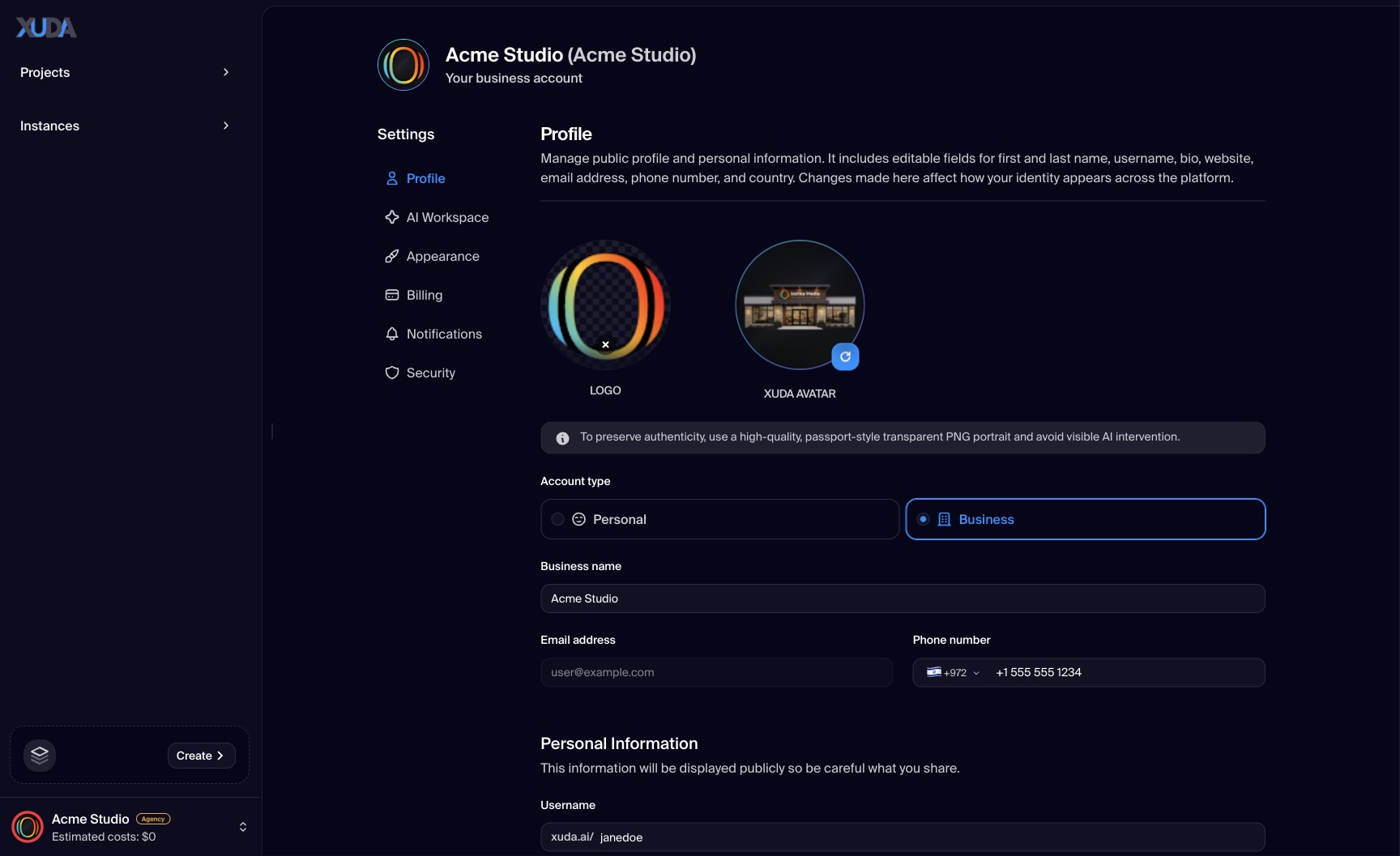
A level is not a badge somebody grants you. It is a set of claims that were all true at the same moment.
Read about verificationTwenty-three pages, and half of what is on them is not prose.
The pages argue with drawings and tables rather than with adjectives, because a claim you can read off a picture is a claim you can check. These four counts are of this section itself.
- Sixty diagrams across six layouts: a bus, a pipeline, two lanes, a matrix, a fork and a convergence.
- Thirty comparison tables, which is where anything you read down a column belongs.
- Seventeen transcripts: a real console session, a reply shape, a receipt. Not prose in a monospaced font.
- Twenty-one of the twenty-three pages close on what they do not do, and the two that do not are named on this page.
Four things this page does not do.
- It explains nothing itself. Every claim on this page belongs to the page it links to, and the cards are deliberately a sentence or two so there is no third place for the same fact to drift.
- The counts here were taken on the day this page was written, and the platform keeps moving. The shape of the answer is the durable claim; the totals are a snapshot.
- Three of the twenty-two pages route rather than explain: this one, platform-features and the audiences page. The other nineteen carry content of their own.
- Four pages are not carded above. Individuals, professionals, teams and agencies sit behind the audiences card, because the question they answer is which of the five you are, and that page asks it better than a fourth grid would.
Pick the page that answers your question.
Every page in this section was written to be argued with: the numbers say where they came from, and the limits sit in the body rather than in a footnote. Open the one that matches what you are trying to decide, and open an account when it stops being a question.